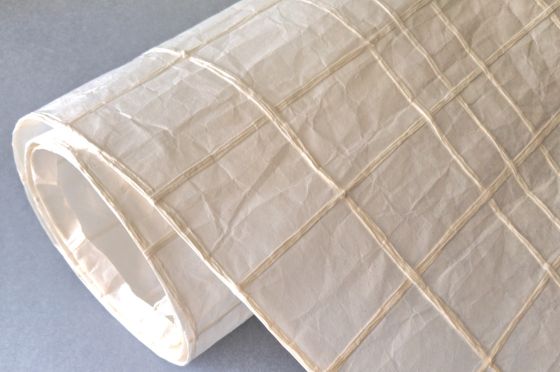
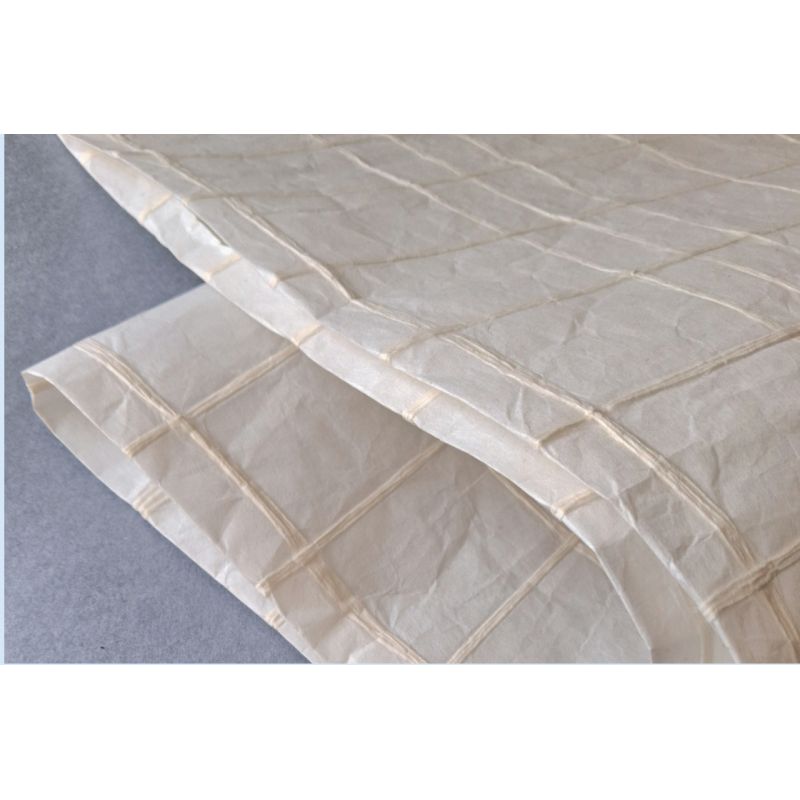
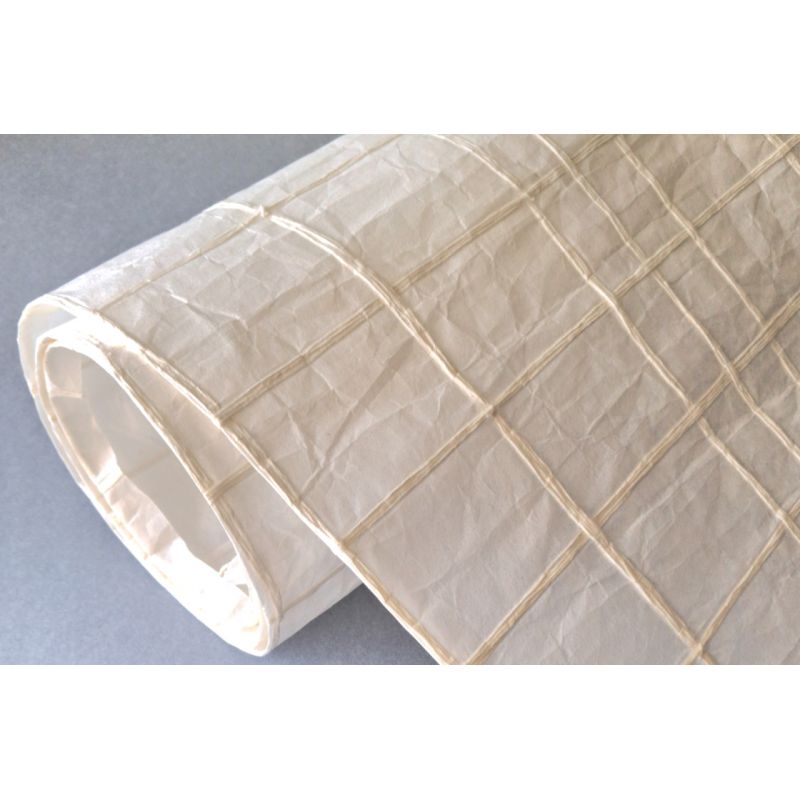
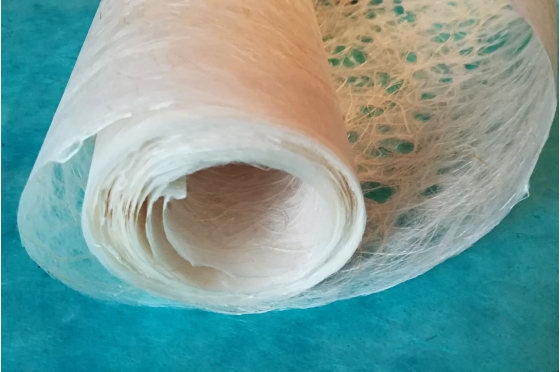
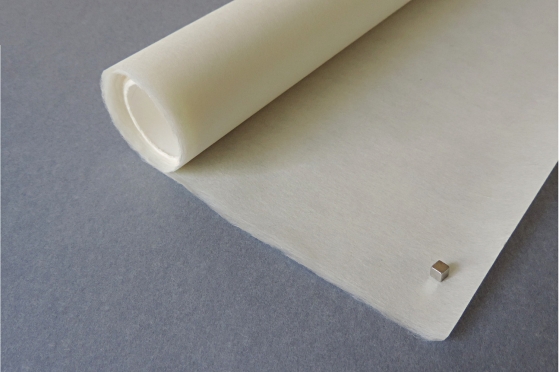
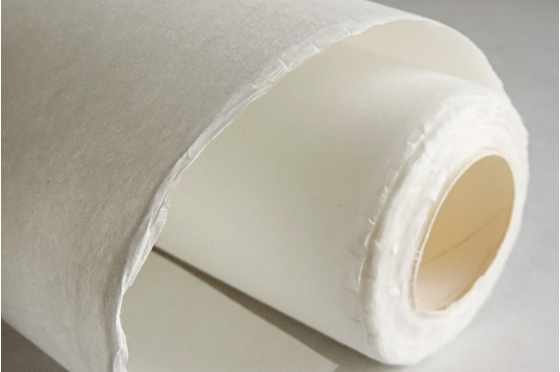
The long mulberry fiber gives a thick texture to the shoji and fusuma panels. The material "breathes" and creates a unique light.
In the past, sliding shoji panels could be left open in summer, but in winter, the cold weather prevented this, preventing residents from enjoying the outdoor view. Sliding wooden doors were added to protect the shoji in cold or rainy weather.
Very beautiful light diffusion. Cloudy effect.
Kozo is mulberry fiber.
(*) M1 (France) Euroclass B-s1,d0 fire retardant "B: hardly flammable, but may contribute slightly to fire"
(**) Shoji refers to a traditional Japanese architectural element, generally used as a partition or screen. Shoji are sliding panels of translucent paper mounted in wooden frames and are often used to divide spaces in homes, temples, and other buildings in Japan.
They are made using a traditional Japanese carpentry technique, with wooden frames joined using mortise and tenon joints, and washi paper stretched over the frames to create translucent surfaces. The washi paper used for shojis is usually made from mulberry or other plant fibers and is known for its durability and beauty.
Highly prized for their elegant aesthetic and versatile functionality, they help divide spaces while still allowing light to pass through, creating a soft and warm ambiance in rooms. Shojis are also used as doors and windows, and can be opened or closed depending on privacy or ventilation needs.
Shojis are often associated with traditional Japanese culture and are used in many styles of Japanese architecture, such as teahouses, traditional Japanese houses (known as "machiya"), and temples. However, they are also used in more modern and contemporary designs, bringing a touch of tradition and elegance to contemporary spaces.
In short, shoji are sliding panels of translucent paper mounted in wooden frames, used as partitions or screens in traditional Japanese architecture, appreciated for their aesthetics and functionality.
Delivery to France, the European Union, overseas territories, and more than 80 countries outside the EU!